
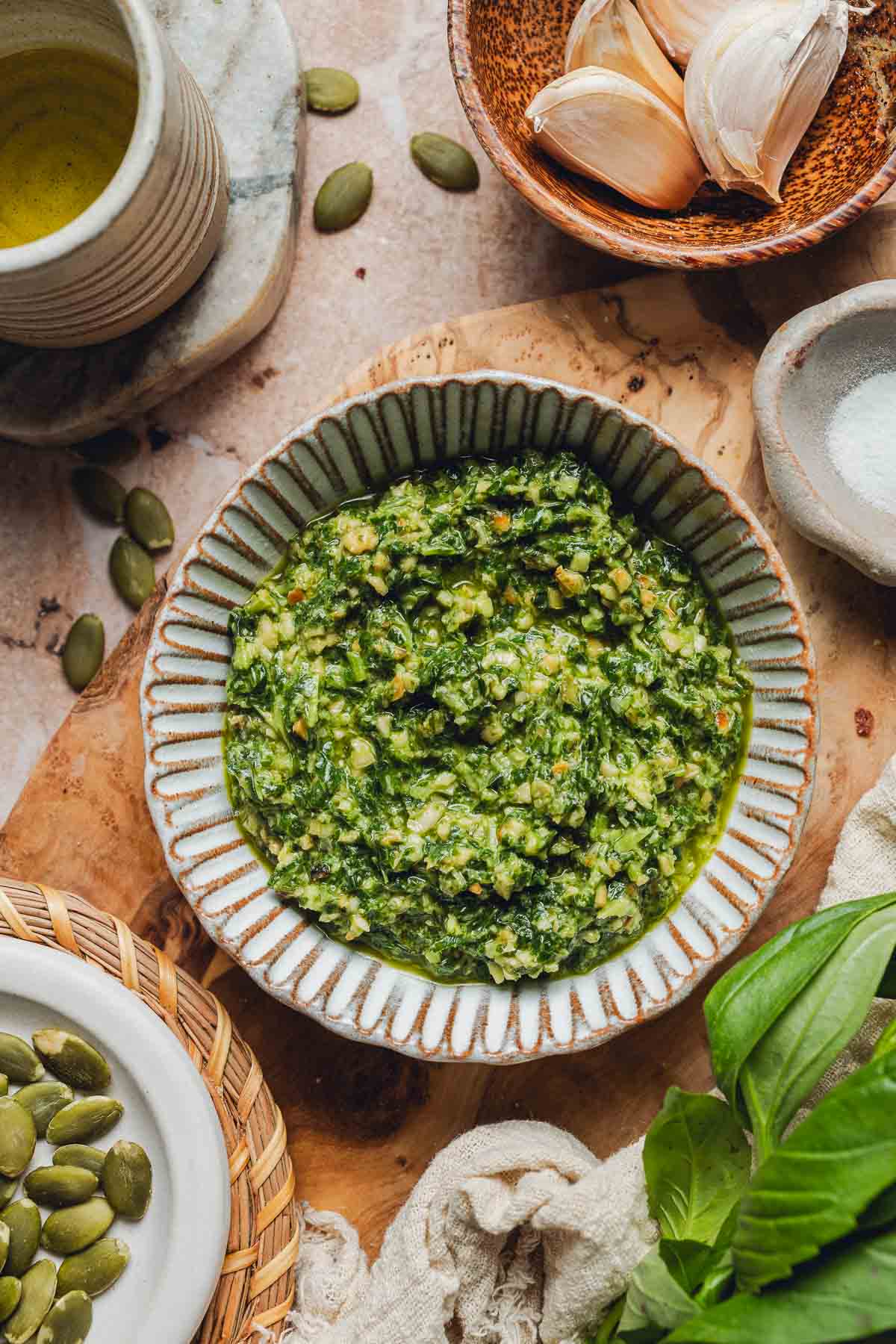
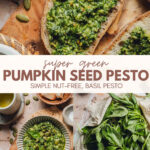
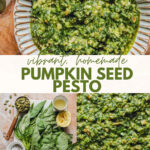
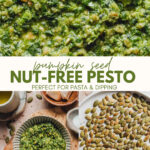
This nut-free pumpkin seed pesto uses fresh basil leaves but skips the pine nuts to save you the expense. It's rich, garlicky, packed with flavor, and its sheer versatility means you'll find endless uses for it.
Jump to:
💌 Why This Recipe Works
If the price of pine nuts has ever made you wince, this pumpkin seed pesto recipe is for you.
- Nut-free. No pine nuts or other expensive nuts required, making it a useful alternative for people avoiding nuts.
- More budget-friendly. Pumpkin seeds are easy to find at any grocery store and cost a fraction of pine nuts.
- Just as rich as traditional pesto. Same savory depth as the classic - and you can use it the same way, too.
- A great way to use up basil. Perfect for using fresh basil before it wilts.
- Ready in 15 minutes. One food processor, a handful of ingredients, and you've got homemade pesto with the best flavor.
- Simple, not worse. A cheaper, simpler take on a classic recipe without losing any flavor.
Disclaimer - Purists might reach for a mortar and pestle (and you can too, if you have one!), but this recipe uses a food processor to keep things simpler, quicker, and accessible to more people.
🛒 Ingredients
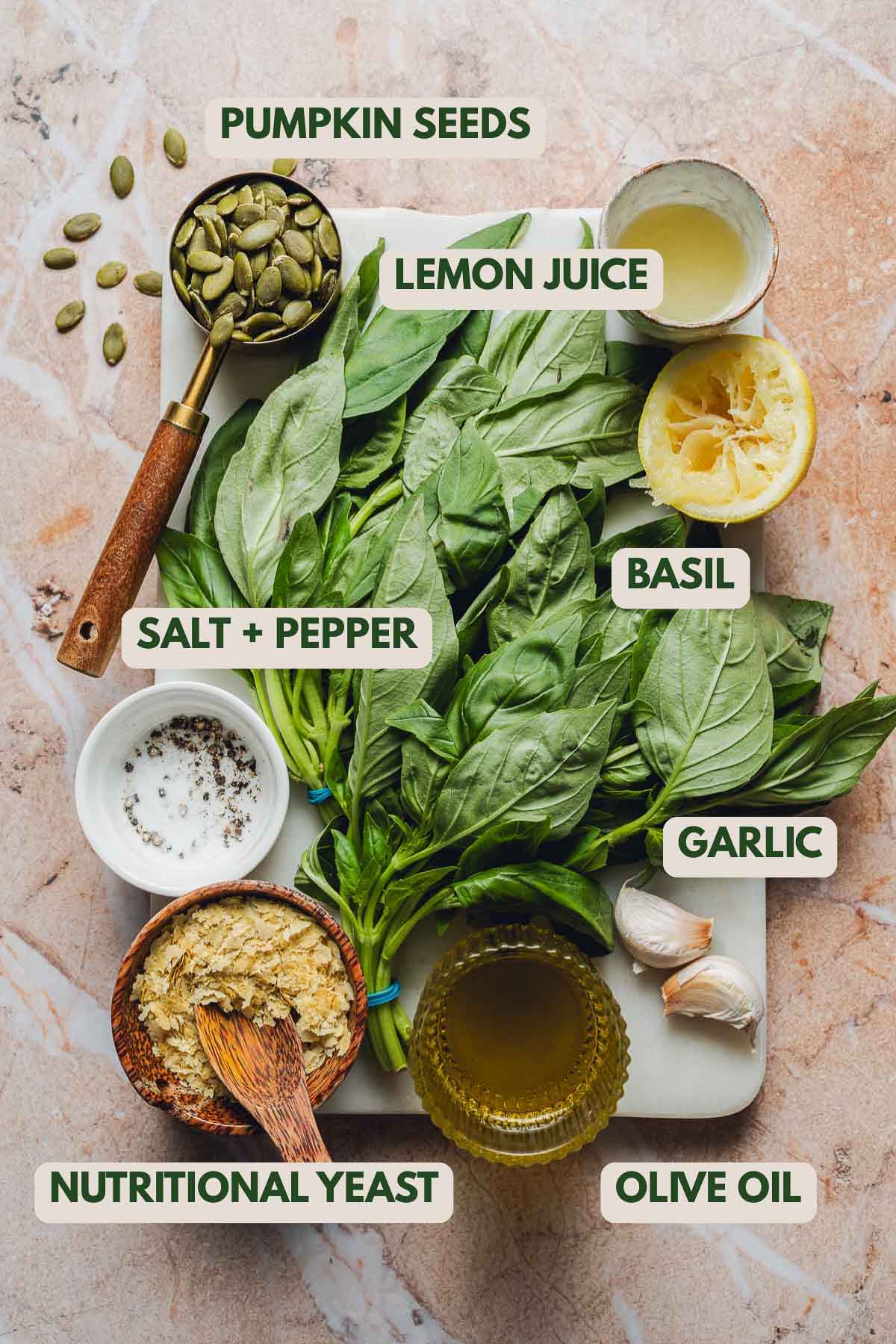
Here's what you'll need and why each one matters:
- Fresh basil - it's the star of any pesto, giving it that signature herby flavor. The stalks pack flavor too, so there's no need to waste them.
- Pumpkin seeds - our pine nut swap. Unsalted pumpkin seeds are MUCH cheaper than pine nuts but just as rich and tasty once toasted.
- Extra virgin olive oil - the rich base for our pesto, packed with healthy fats.
- Nutritional yeast - our vegan parmesan alternative. It brings that nutty, cheesy flavor without any dairy, plus a boost of B vitamins.
- Garlic - fresh garlic cloves add the punch that ties everything together. You can adjust the amount to your taste.
- Lemon juice - brightens the flavor and keeps the pesto green by slowing down browning.
- Salt & pepper - just a pinch of salt and pepper to round out and balance the flavors.
📝 Steps
Don't forget you can find the full recipe (including exact ingredients and in-depth instructions) in the recipe card at the bottom of this page.
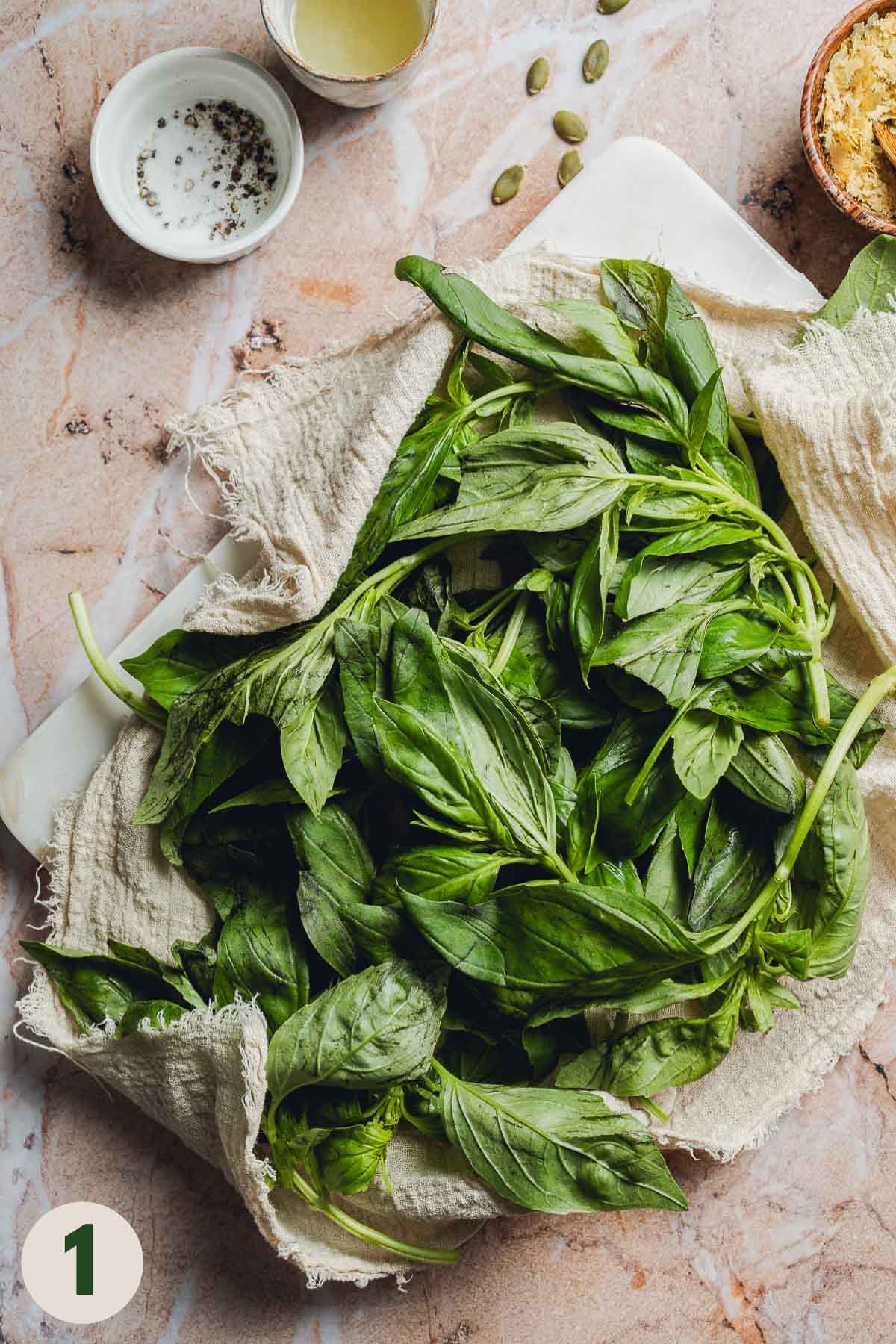
- Wash and dry the basil. Rinse the basil gently to remove dirt, then let it air dry on a clean kitchen towel before use.
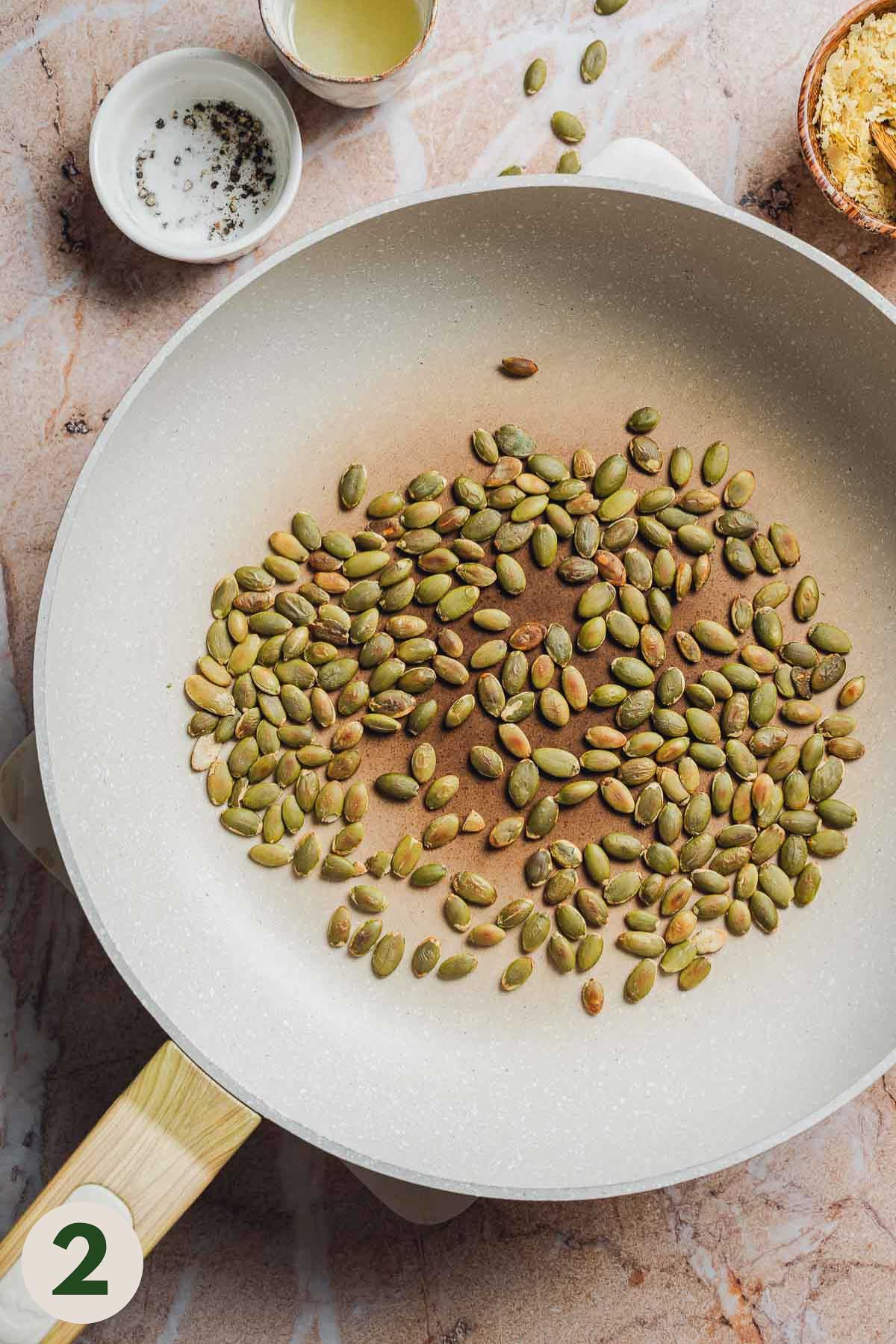
2. Toast the pumpkin seeds. Add the pumpkin seeds to a dry skillet over medium heat. Toast for 4-5 minutes until fragrant. Stir often to prevent burning. Let cool for 5 minutes before adding to the food processor.
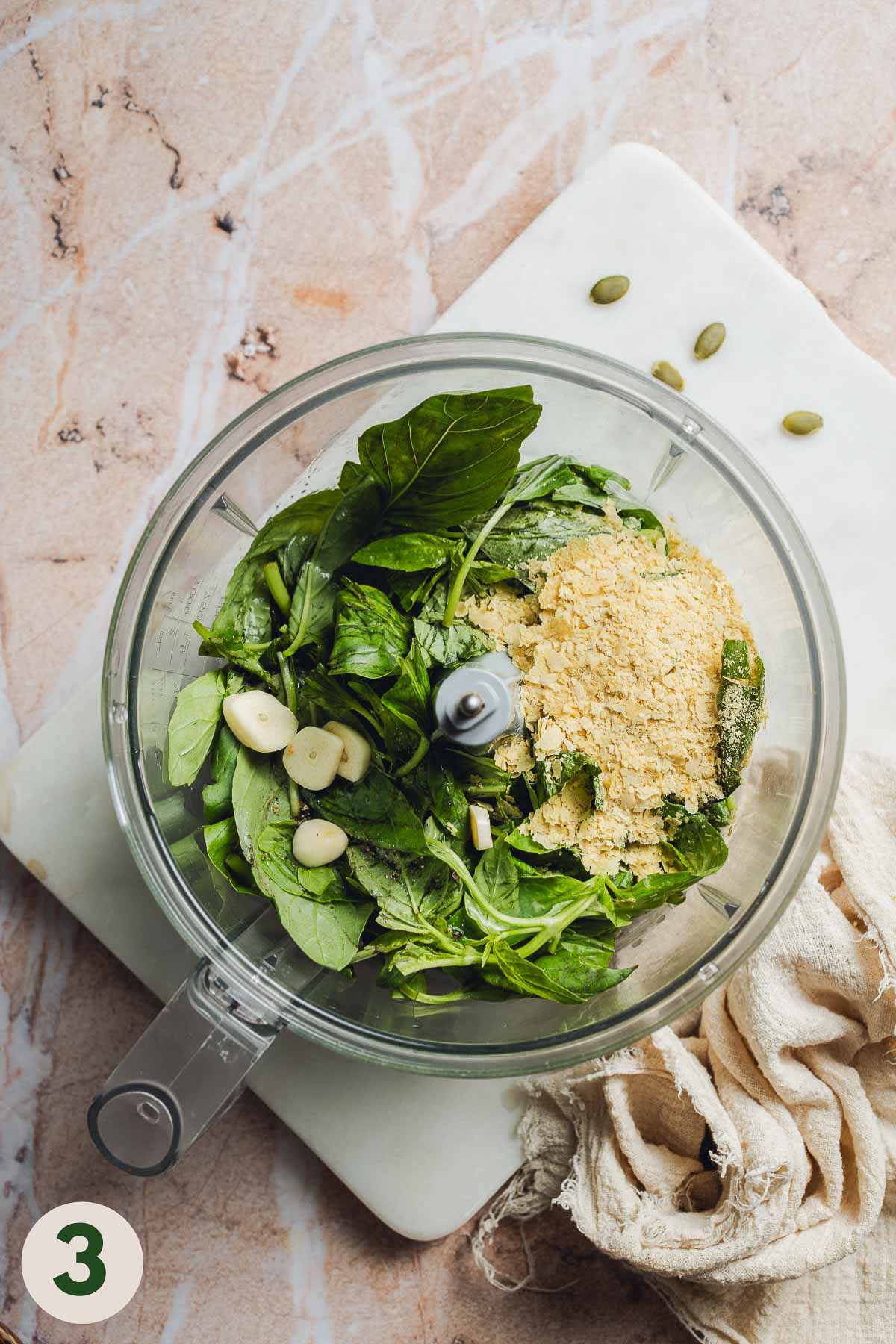
3. Add ingredients. In a food processor or high-speed blender, combine the toasted pumpkin seeds, fresh basil, garlic cloves, nutritional yeast, lemon juice, salt, and black pepper.
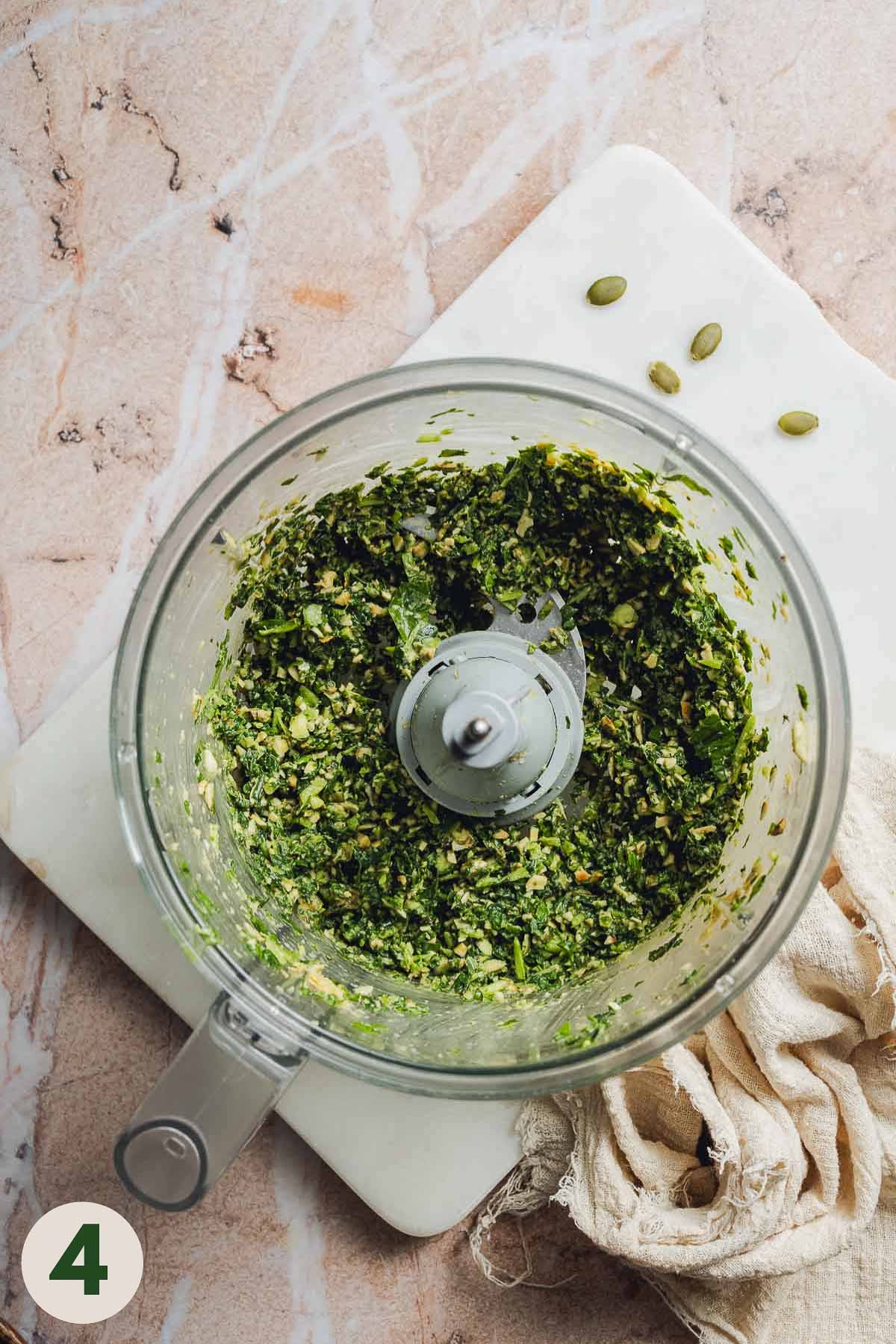
4. Pulse to combine. Pulse the ingredients until roughly combined.
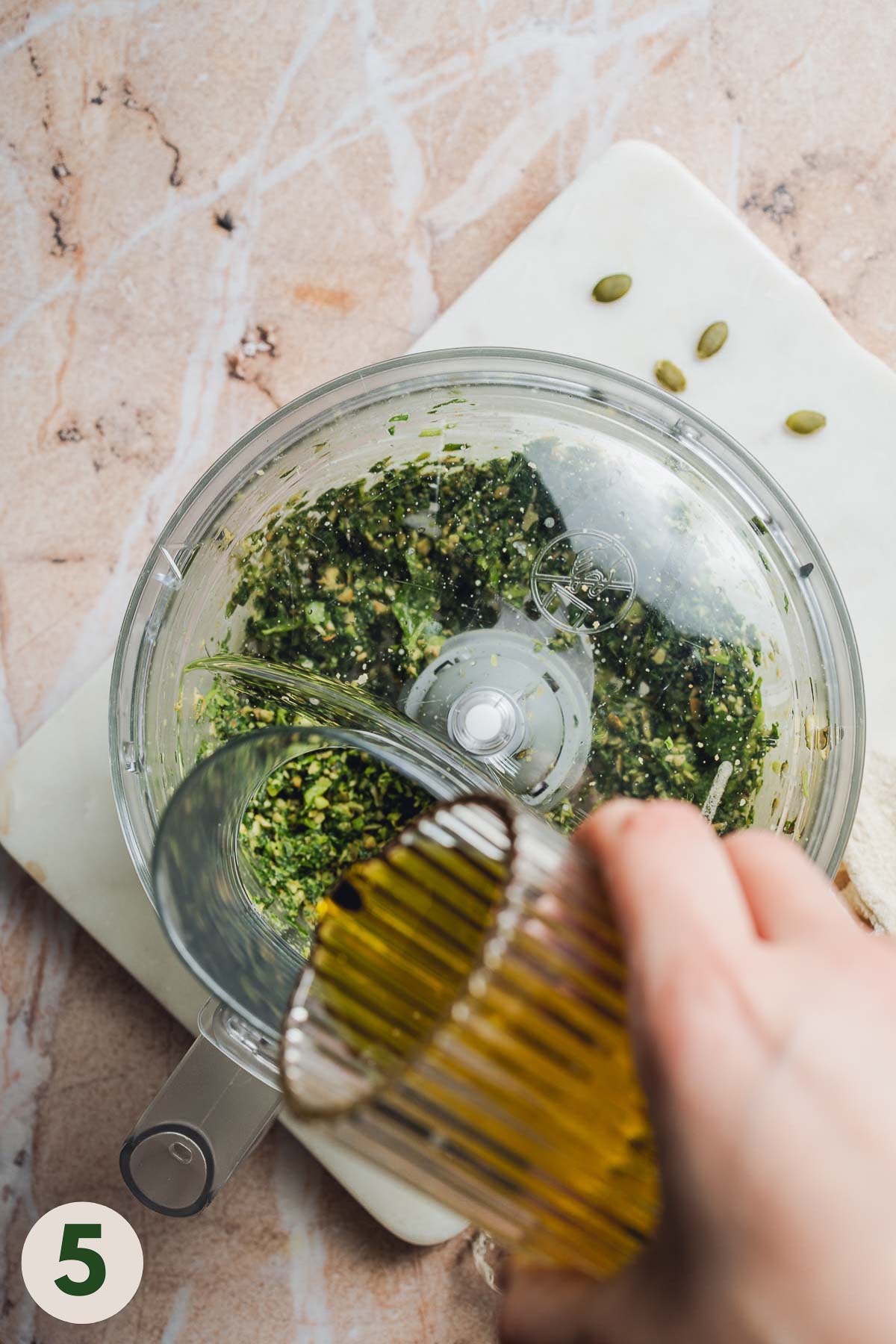
5. Drizzle in the oil. With the processor running on low speed, slowly pour in the extra-virgin olive oil until it reaches a pesto-like consistency.
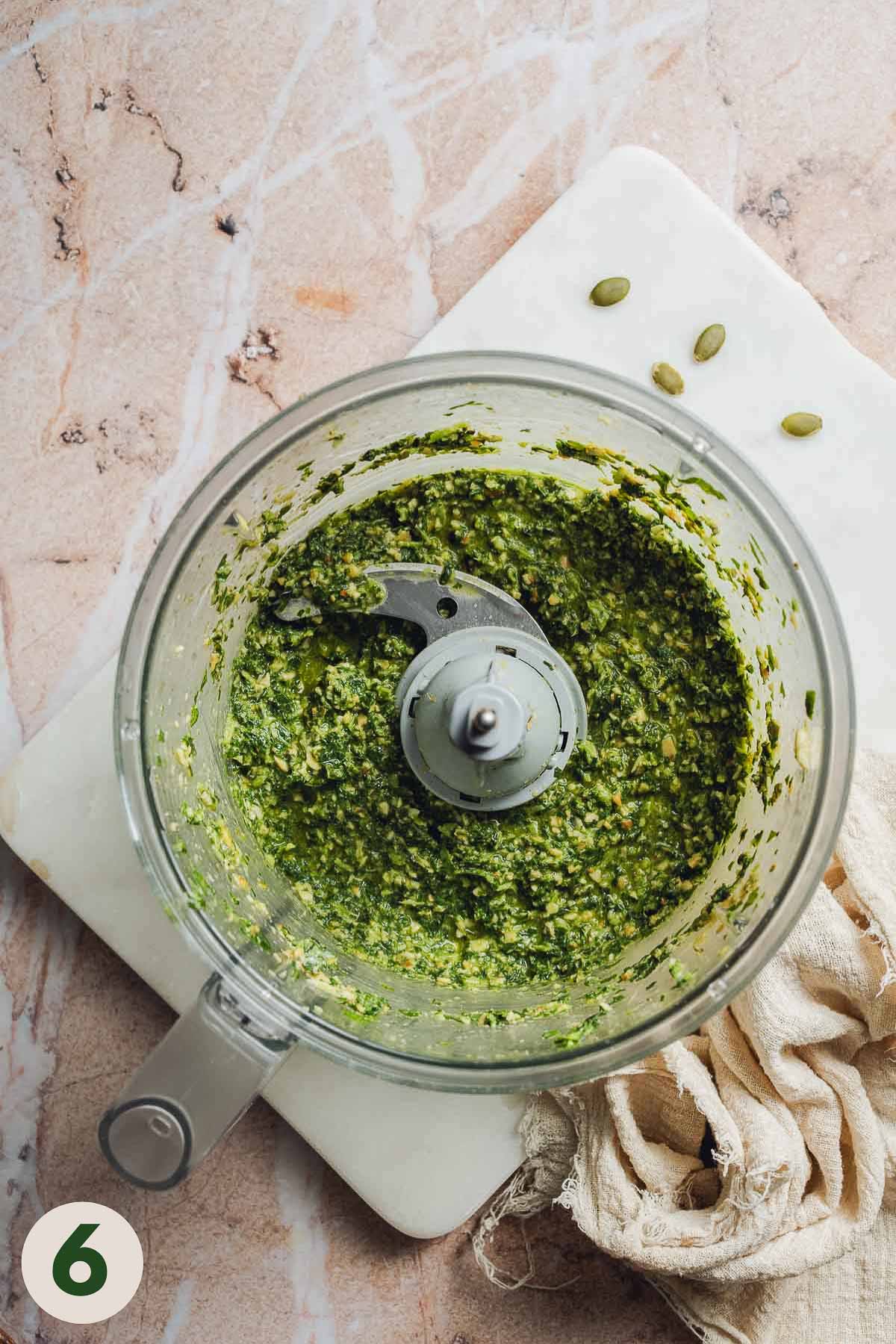
6. Taste and adjust. Add more salt, pepper, garlic, or a squeeze of fresh lemon juice to taste.
Serve and store. Use right away, or transfer to a clean jar for storage.
Did you know? Slowly drizzling in the oil at the end helps it emulsify smoothly while limiting its exposure to heat (the motor & blade can generate heat while they run) and friction, which keeps the pesto's flavor fresh instead of bitter.
💡 Expert Tips
- Toast your pumpkin seeds. Toasting triggers the Maillard reaction, developing deep, nutty, roasted flavors that give your pesto more depth than raw seeds would.
- Add oil slowly. Drizzle the olive oil in gradually while the food processor is running for an evenly blended, well-emulsified pesto.
- Taste as you go. Garlic can vary in strength, and the flavor of extra-virgin olive oil, basil, and even salt can differ too. Once your pesto is blended, taste and adjust the seasoning to suit your preference.
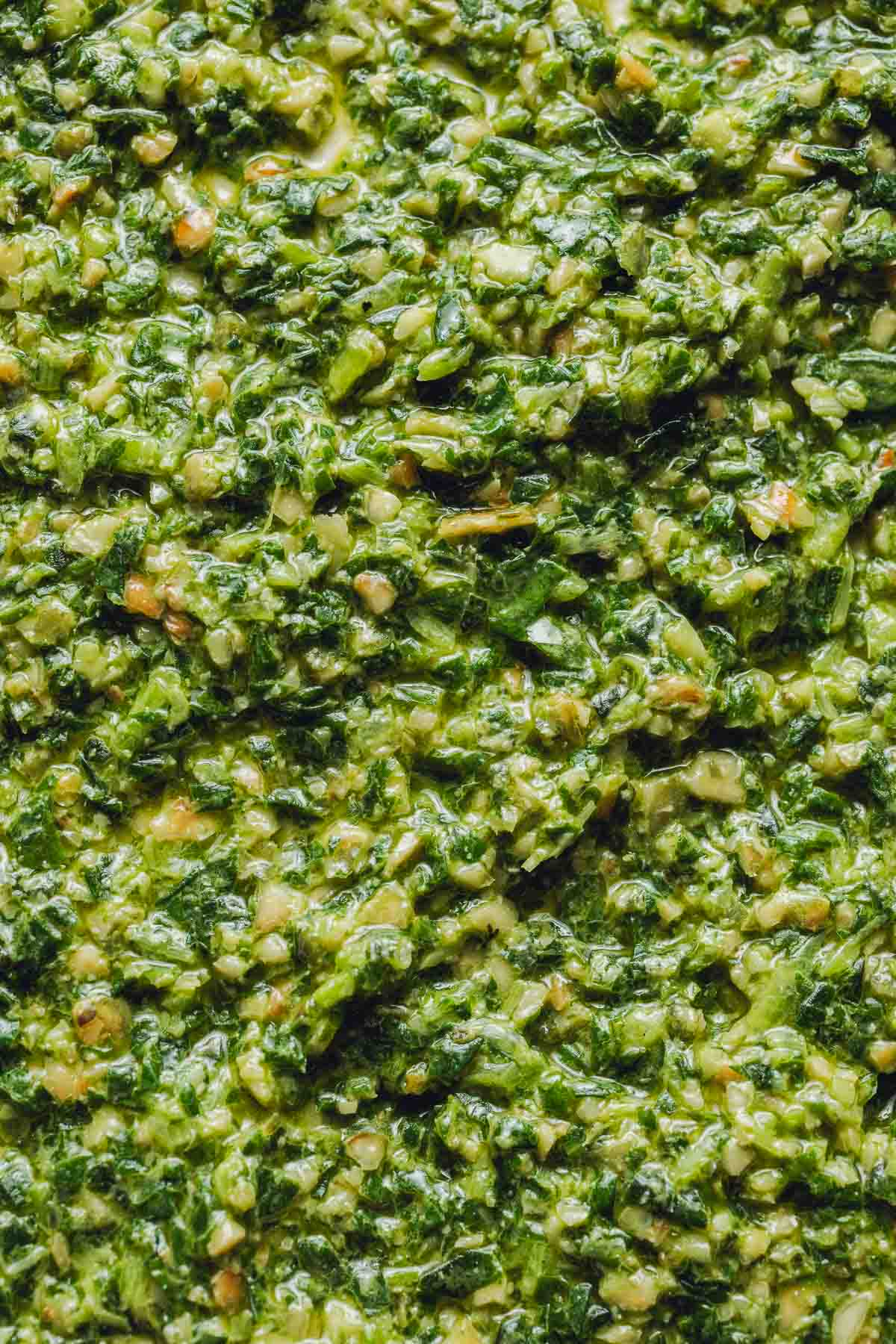
- Don't over-process. Pesto should always retain a little texture, rather than be perfectly smooth like a puree or hummus. Pulse instead of blending continuously to achieve the best flavor and traditional pesto texture.
❓FAQ
Yes, the ingredients are naturally gluten-free. However, if you're cooking for someone with coeliac disease or a severe gluten allergy, check the labels of packaged ingredients for cross-contamination warnings.
Yes, although the pesto will be less rich and creamy. Start by replacing the olive oil with a small amount of ice-cold water and add more as needed until you reach your preferred consistency.
Yes, you can use grated parmesan cheese or Grana Padano instead of nutritional yeast. This will give you a more traditional pesto flavor. Remember, if you are a vegetarian, hard cheeses like parmesan are often not vegetarian because they contain rennet, so make sure to check the label and specifically look for vegetarian parmesan alternatives.
🌿 Variations
Here are a few ways to make this pumpkin seed vegan pesto recipe even if you're missing the main ingredients.
- No basil on hand? Swap it for spinach, parsley, arugula, or kale. Remember, this will change the flavor quite a bit.
- Want it spicy? Add a pinch of red pepper flakes or cayenne pepper for a little heat.
- Out of pumpkin seeds? Sunflower seeds work well as a 1:1 substitute.
- Prefer a different oil? Avocado oil is a good substitute for extra-virgin olive oil if you want a milder flavor.
- Extra tang? Add a small splash of apple cider vinegar for a more distinct hit of acidity.
🍽️ Serving Ideas
Just like traditional pesto, this pumpkin seed version is so versatile.
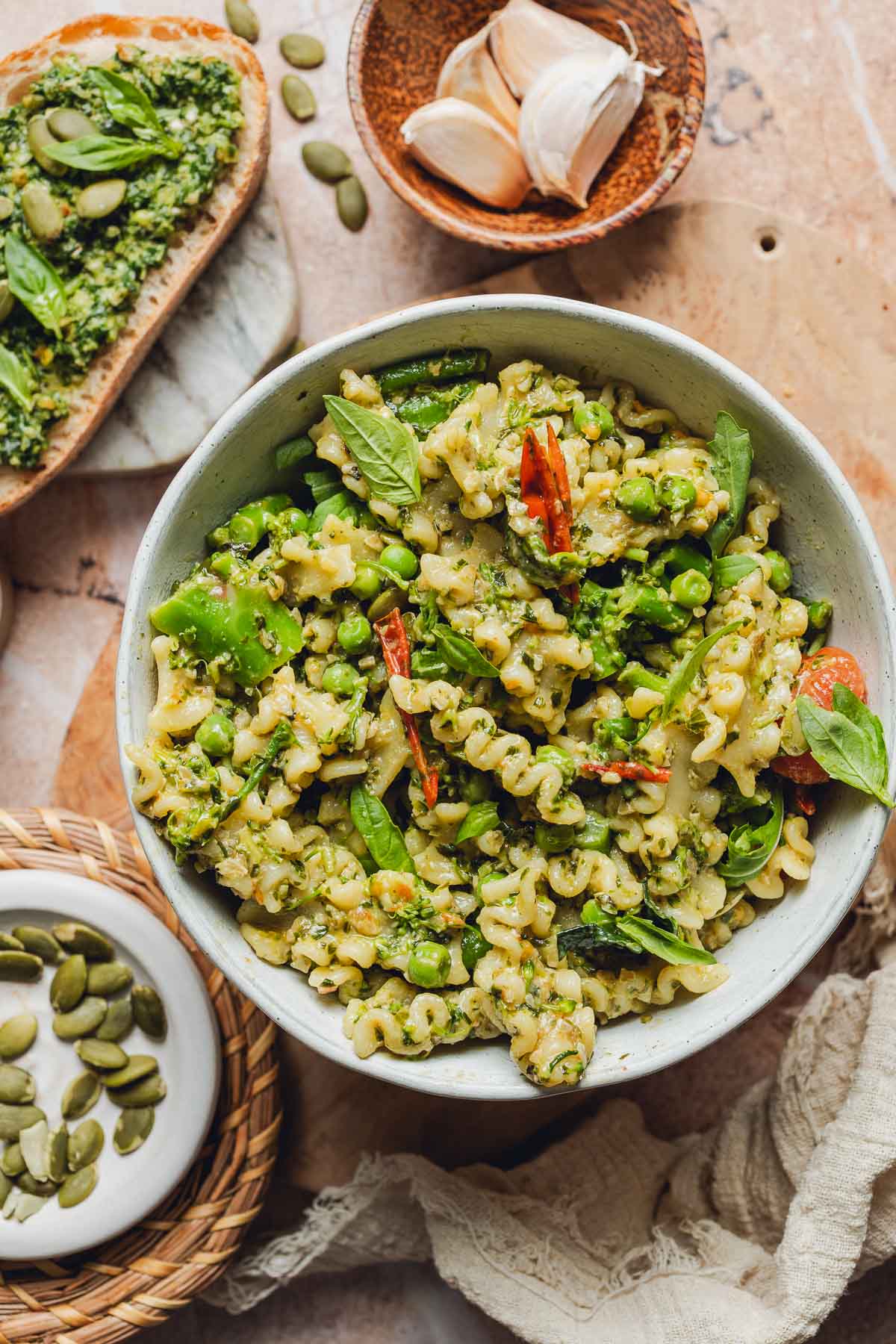
- Stir it through hot pasta for an easy dinner, and serve with extra veggies and arugula for crunch.
- Use it to pack flavor into pasta salad on those hot days when you need a refreshing dish.
- Dip it into freshly baked dinner rolls or pretzels.
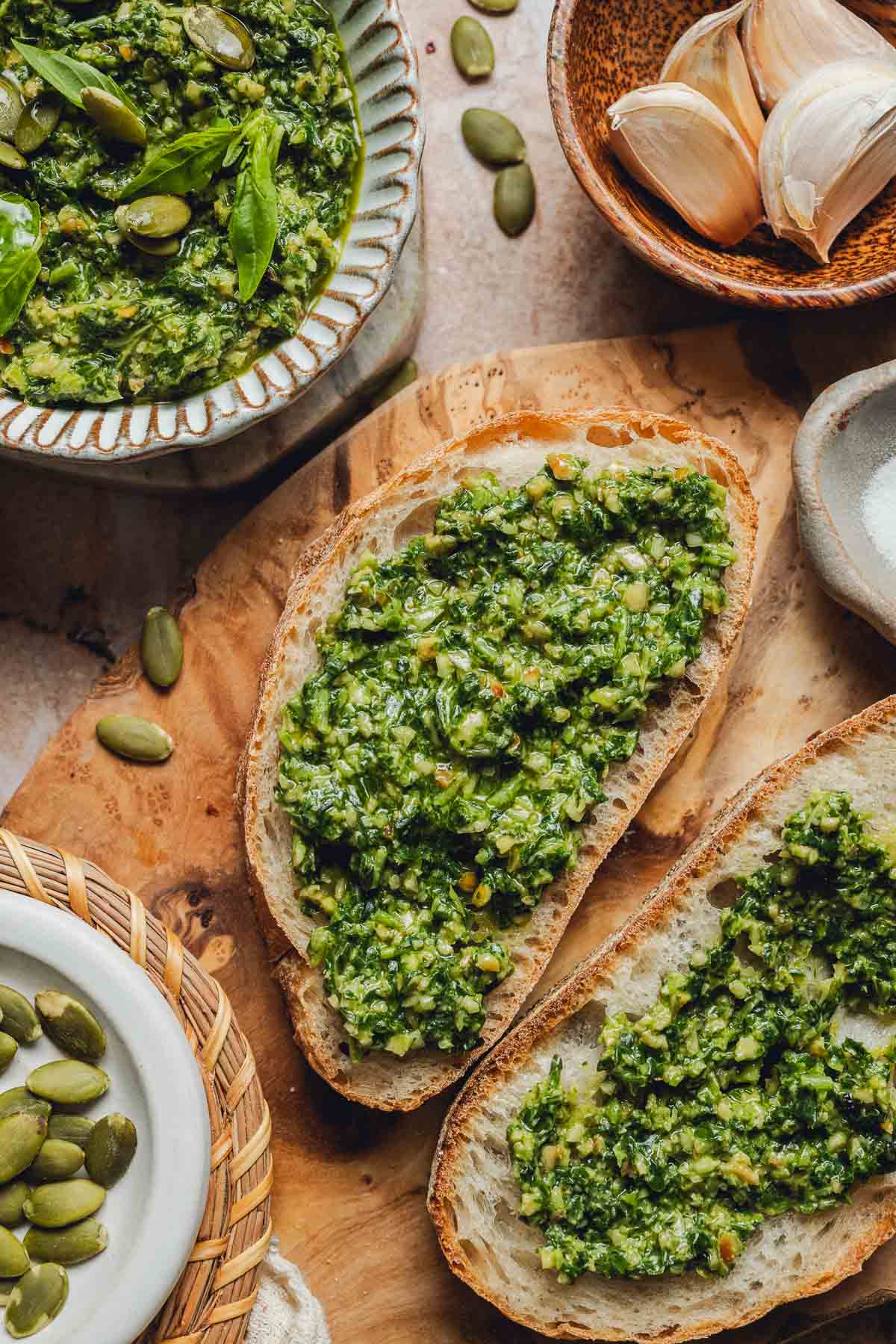
- Use it as a sandwich spread - so much more flavor than mayo or margarine.
- Toss it through zucchini noodles for a low-carb, no-cook dinner.
- Stir it through your salad dressing for an extra punch of flavor.
- Spread it over these crispy smashed tater tots or other potato dishes.
- Use it as a filling in my garlic & herb twist bread - such a showstopper!
📦 Storage
Store your pesto in an airtight container in the fridge for up to 3 days. I recommend pouring a thin layer of olive oil on top before sealing. This helps preserve the color and freshness.
For longer storage, you can freeze this pesto in an ice cube tray, then pop the cubes into a freezer bag for single-serving portions whenever you need them.
Green Tip: Reuse a thoroughly cleaned jar from pasta sauce, nut butter, pickles, or jam instead of buying new containers. It's free, often sturdier, and just as effective for storage.
👋 More Pumpkin Seed Recipes
- Oven-Roasted Pumpkin Seeds: 4 Ways
- Savory Vegan Breakfast Muffins
- Creamy Vegan Leek Soup without Potatoes
- Peach Cobbler Overnight Oats
🍴Recipe
Pumpkin Seed Pesto - Simple Nut-Free Basil Pesto
EQUIPMENT
- Food processor, high-speed blender, or pestle and mortar
- Pan
INGREDIENTS
- ¼ cup (40 g) pumpkin seeds
- 2.5 oz (70 g) fresh basil (roughly 2.5 cups)
- 2 tablespoon nutritional yeast
- 2 cloves garlic
- 1 tablespoon lemon juice
- ⅓ cup (80 ml) extra-virgin olive oil
- ½ teaspoon (1 pinch) salt or more to taste
- ¼ teaspoon black pepper or more to taste
INSTRUCTIONS
- Wash and dry the basil. Rinse the basil gently to remove dirt, then let it air dry on a clean kitchen towel before use.2.5 oz fresh basil
- Toast the pumpkin seeds. Add the pumpkin seeds to a dry skillet over medium heat. Toast for 4-5 minutes until fragrant. Stir often to prevent burning. Let cool for 5 minutes at room temperature before adding to the food processor.¼ cup pumpkin seeds
- Add ingredients. In a food processor or high-speed blender, combine the toasted pumpkin seeds, fresh basil, garlic cloves, nutritional yeast, lemon juice, salt, and black pepper.2 tbsp nutritional yeast, 2 cloves garlic, 1 tbsp lemon juice, ½ tsp salt
- Pulse to combine. Pulse the ingredients until roughly combined.
- Drizzle in the oil. With the processor running on low speed, slowly pour in the extra-virgin olive oil until the mixture reaches a pesto-like consistency.⅓ cup extra-virgin olive oil
- Taste and adjust. Add more salt, pepper, garlic, or a squeeze of fresh lemon juice to taste.
Notes
- Tip 1 - Add oil slowly. Drizzle the olive oil in gradually while the food processor is running.
- Tip 2 - Taste as you go. Once your pesto is blended, taste it and adjust the seasoning to suit your preference.
- Tip 3 - Don't over-process. Pesto should always retain a little texture, rather than be perfectly smooth like a puree or hummus.
Nutrition
Disclaimer: The nutritional information above is calculated automatically. The author of this post cannot guarantee 100% accuracy of this data.

Leave a Reply